
 |
| Source IPL |
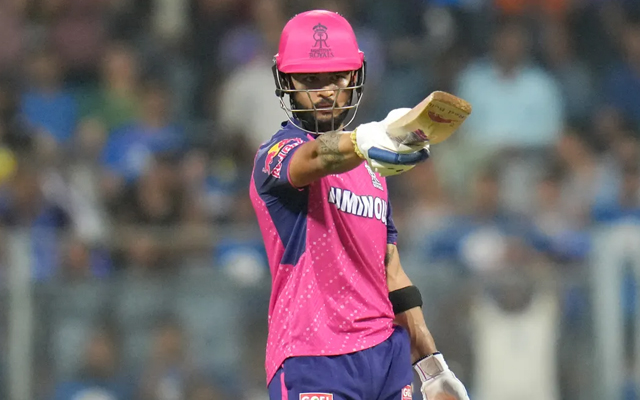
Riyan Parag has never looked like a conventional Indian cricketer in terms of personality or presence. He carries himself with visible confidence, swagger, and a certain level of self-belief that stands out immediately. The body language, the attitude, the way he moves around the field — it all projects someone who sees himself as a major player.
But that’s also why the disconnect becomes harder to ignore.
For years, Rajasthan Royals have continued backing him heavily, even during phases where the performances simply did not justify that level of investment. Most young Indian players in the IPL are forced to constantly prove themselves after every poor season. With Parag, RR seemed willing to absorb failure for much longer than franchises usually tolerate.
That naturally raises questions.
At one point, Sanju Samson was leading the side, and then suddenly leadership conversations started shifting toward Parag. Whether temporary or strategic, from a pure cricketing perspective, it felt difficult to understand. Leadership in IPL teams is usually built around either elite consistency, tactical excellence, or long-term match-winning influence.
Parag, until recently, had not consistently shown enough of any of those to justify that level of elevation.
That’s the core reason why many people see this as an unusual case.
The perception is not just that RR backed him — franchises do that with young talent all the time. The perception is that he received rewards, importance, and positioning ahead of what his actual performances demanded at that stage.
And in professional sport, perception matters.
Because once a player is viewed as “overprotected” or “fast-tracked,” every failure gets magnified further. Fans start comparing opportunities versus output. That scrutiny becomes brutal in a tournament like the IPL.
To Parag’s credit, he has improved significantly compared to his early seasons. His confidence is no longer completely disconnected from contribution. There are now innings and phases where he genuinely looks like a high-impact T20 player rather than just a prospect surviving on potential.
But the debate still exists because RR’s faith in him arrived much earlier than the sustained performances did.
That is why his case feels so polarizing.
Some see it as visionary backing of a talented player before his breakout.
Others see it as a franchise forcing importance onto a player who had not fully earned it yet.
And honestly, both arguments have some validity.

0 Comments
Please comment here!